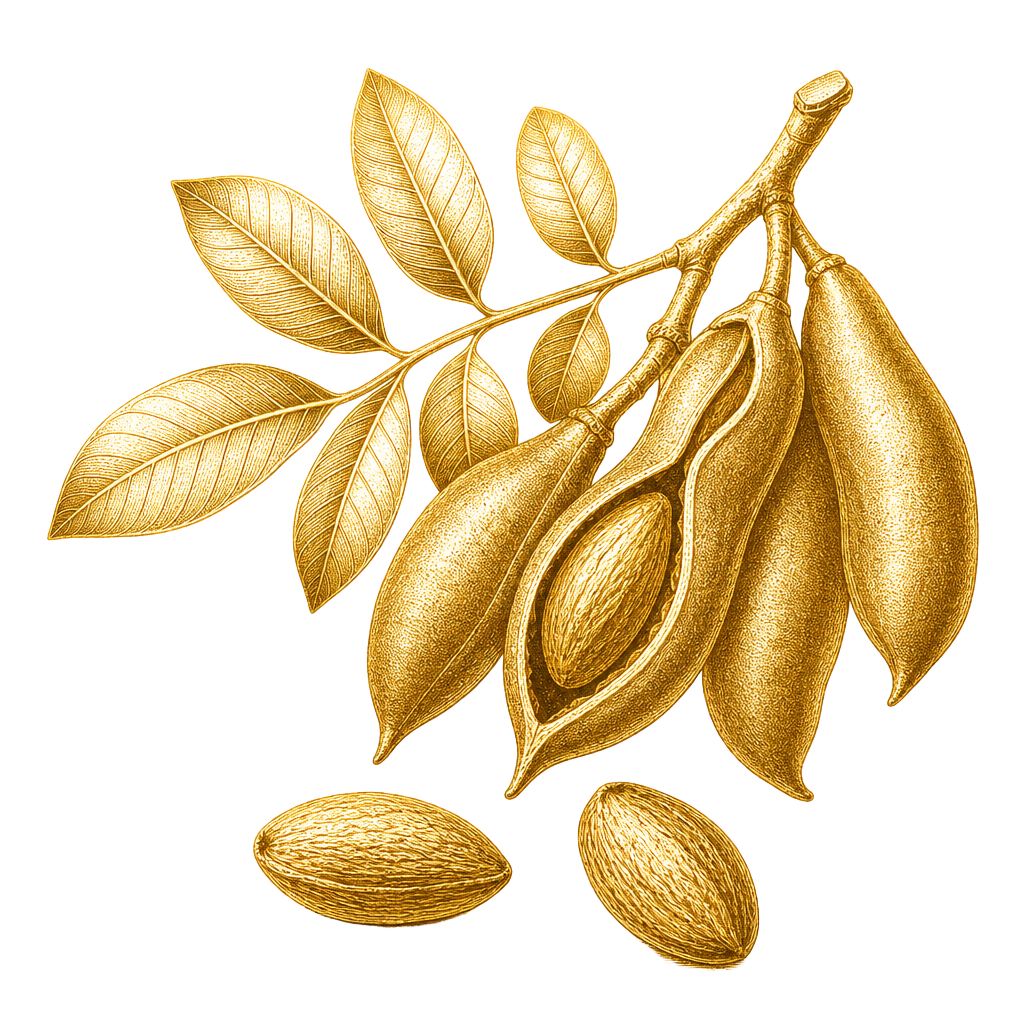
10 Science-Backed Health Benefits of Baru Nuts
Updated June 2026 · Reviewed against USDA and peer-reviewed nut research
Baru nuts (Dipteryx alata) come from the Brazilian Cerrado — a biome second only to the Amazon. Their nutrient profile is so dense that researchers regularly call baru one of the world's most underrated functional foods. Here's what the evidence shows.
Benefit #1
Highest plant protein of popular nuts
At 26g per 100g, baru tops almonds (21g), cashews (18g) and walnuts (15g). A 30g handful delivers ~7.8g of complete plant protein with all 9 essential amino acids — a rare profile for a nut.
Benefit #2
Lowest calorie density of popular nuts
502 kcal per 100g — about 13% fewer calories than almonds and 23% fewer than walnuts. The protein-to-calorie ratio is the best in its category for satiety.
Benefit #3
Exceptional fiber for gut health
13g of fiber per 100g feeds your gut microbiome and supports steady digestion. That's over 4× the fiber in cashews and almost 2× walnuts.
Benefit #4
Heart-healthy monounsaturated fats
20g of monounsaturated fats per 100g — the same fat family found in olive oil — linked in clinical studies to lower LDL cholesterol and reduced cardiovascular risk.
Benefit #5
Rich in antioxidants
Baru is naturally high in polyphenols (gallic acid, catechins) and vitamin E equivalents that protect cells from oxidative stress. Comparable antioxidant capacity to walnuts.
Benefit #6
Blood sugar friendly (low GI)
Only 15g carbs and <2g sugars per 100g, combined with fiber and protein, produce a minimal blood-sugar spike. Suitable for low-GI, low-carb and keto eating patterns.
Benefit #7
Plant-based iron & zinc
34% of your daily iron and 37% of zinc per 100g — meaningful for vegetarians, vegans, and active people who need to top up trace minerals.
Benefit #8
Magnesium for energy & sleep
180mg magnesium per 100g (≈43% DV) supports muscle function, energy metabolism and restful sleep — a nutrient most adults under-consume.
Benefit #9
Naturally gluten-free & nut-allergen friendly
Baru is botanically a legume, not a tree nut. People with tree-nut allergies sometimes tolerate it — but always test under medical guidance.
Benefit #10
Sustainable & wild-harvested
Baru trees aren't farmed. Every nut is hand-gathered from the Cerrado floor, protecting Brazil's second-largest biome and supporting family cooperatives.
Frequently asked
What are the main health benefits of baru nuts?
High plant protein (26g/100g), exceptional fiber (13g), heart-healthy monounsaturated fats, antioxidants, low calorie density, and high iron, zinc and magnesium — all in one nut.
Are baru nuts good for weight loss?
Yes. Lowest calorie density of popular nuts, highest fiber and high protein — three factors clinically linked to satiety and easier weight management when portioned (≈30g/day).
Are baru nuts good for diabetes or blood sugar?
Baru has only 15g carbs and <2g sugar per 100g, combined with protein and fiber — producing a small post-meal glucose response. A useful low-GI snack for blood sugar control.
Are baru nuts heart-healthy?
Yes. They're rich in monounsaturated fats and polyphenol antioxidants linked in published nut studies to improved LDL cholesterol and cardiovascular markers.
Are baru nuts safe for people with tree-nut allergies?
Baru is botanically a legume (closer to peanut family) and some tree-nut-allergic people tolerate it. Always confirm with an allergist before trying.
Get the benefits — daily
A 30g handful covers ~8g protein, 4g fiber and a third of your daily iron.
Shop baru nutsThis page is informational and not medical advice. Consult a healthcare provider for conditions or allergies.